Brinell and Rockwell hardness testing are two of the most widely used methods for measuring material hardness. Although they serve different applications and use different testing principles, understanding the relationship between them can help engineers and technicians interpret results across various standards and industries.
At UPI Laboratories Europe BV, we specialize in supplying and calibrating certified equipment for both Brinell and Rockwell testing methods. While we do not provide conversion services between these scales, we support your measurement processes with high-precision indenters and reference blocks.
Both Brinell and Rockwell methods measure resistance to indentation, but the techniques differ:
Because of these fundamental differences, direct numerical conversion between the two methods is approximate at best, and highly dependent on the material, structure and test conditions.
Both Brinell and Rockwell methods measure resistance to indentation, but the techniques differ:
Because of these fundamental differences, direct numerical conversion between the two methods is approximate at best, and highly dependent on the material, structure and test conditions.
In some situations, engineers refer to standardized conversion tables such as those in ASTM E140 to estimate equivalent values between Brinell and Rockwell scales. These tables are based on empirical data and only apply under specific material conditions.
However, relying solely on conversion charts can lead to inaccuracies. For critical applications, it’s best to perform both Brinell and Rockwell tests directly on the same material batch.
UPI Laboratories Europe BV does not offer conversion services. Instead, we help clients carry out precise measurements using traceable and ISO/IEC 17025-accredited methods.
To support accurate testing across both methods, we offer:
Our calibration services are ISO/IEC 17025 RvA-accredited, ensuring traceability and global recognition of your results.
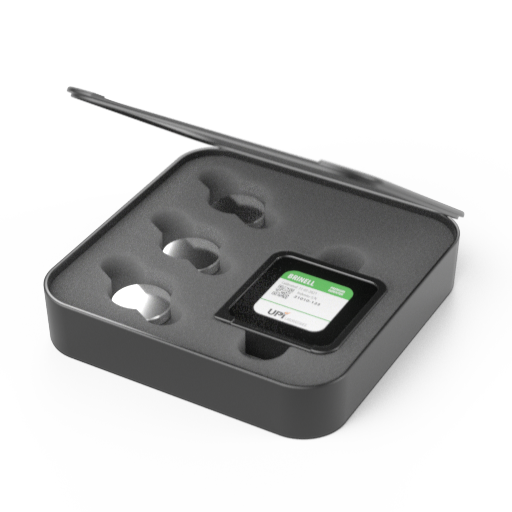
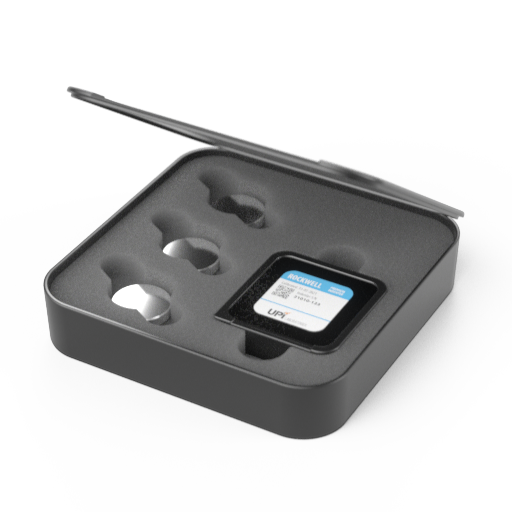
We supply and calibrate Brinell and Rockwell indenters as well as reference blocks, all certified under ISO/IEC 17025 accreditation. Our diamond and carbide ball indenters are manufactured for long-term accuracy and reliability. Test blocks are laser-engraved, dual certified to ISO and ASTM standards, and available with NADCAP-compliant options.
Whenever you need tools for quality assurance in production, UPI Laboratories Europe BV helps you achieve consistency and compliance with international standards.
If you need reliable, calibrated tools for Brinell or Rockwell hardness testing, UPI Laboratories Europe BV is your trusted partner. We offer high-quality indenters and reference blocks, fast delivery and documentation support.
Download our brochure or contact us directly for assistance. We’re happy to help you achieve precision, consistency and international compliance in your hardness measurements.