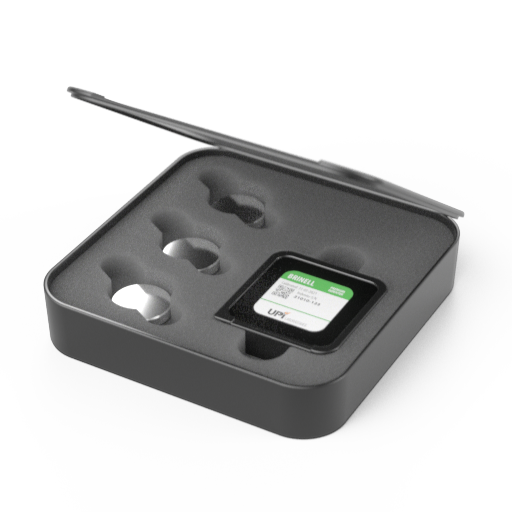
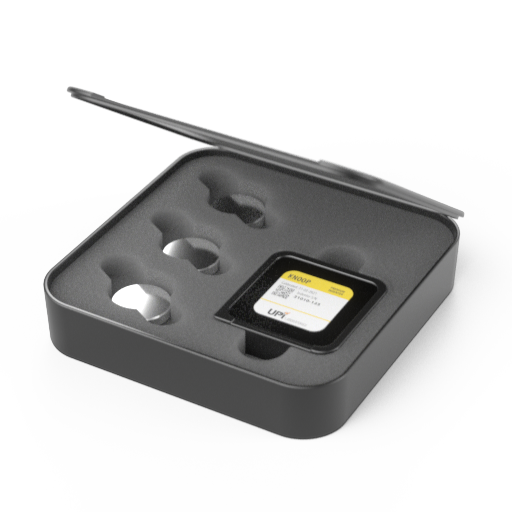
Hardness testing methods are essential for determining how materials respond to applied force. They help industries assess strength, wear resistance, and material quality. At UPI Laboratories Europe BV, we specialize in the calibration and supply of hardness testing indenters and hardness test blocks for Rockwell, Vickers, Knoop, and Brinell methods.
There are four widely used hardness testing methods: Brinell, Rockwell, Vickers, and Knoop. Each method measures a material’s resistance to indentation using a specific indenter shape, test load, and calculation method. Depending on the application and material type, one method may be more suitable than another.
At UPI Laboratories, all hardness testing indenters and reference blocks are calibrated to meet the strictest quality standards. Our diamond and ball indenters are precision-engineered for long life and consistent performance, while our hardness test blocks provide a reliable reference for calibration and verification.
Although all hardness testing methods share the same goal, measuring material resistance, they differ in the type of indenter, applied load, and how the result is calculated. Below you can find the main differences and the tools UPI Laboratories provides for each method.
The Brinell method is one of the oldest hardness testing methods and is ideal for coarse-grained materials such as castings and forgings. It uses a carbide ball indenter under a known load to create an impression, which is then measured to calculate the Brinell Hardness Number (BHN).
The Rockwell test is the most commonly used method across industries due to its speed and ease of use. It measures the depth of penetration under a specific load using either a diamond cone (brale) or carbide ball.
Rockwell testing is ideal for metals, plastics, and composites, offering immediate hardness readings without microscopic evaluation. UPI Laboratories provides Rockwell indenters and calibration tools that meet international test method standards such as ISO 6508 and ASTM E18.
The Vickers method, developed as an alternative to Brinell testing, uses a diamond pyramid-shaped indenter to measure the hardness of all types of metals. The hardness value, known as HV (Vickers Hardness), is calculated based on the size of the indentation.
UPI Laboratories’ Vickers diamond indenters are precision-mounted and dual calibrated to both ISO and ASTM requirements, ensuring accuracy and long lifespan. This method is especially useful for research laboratories, automotive, and aerospace industries.
The Knoop test is a microhardness testing method derived from the Vickers principle. It uses an elongated diamond indenter to measure small or thin samples, coatings, or edges. UPI Laboratories supplies Knoop indenters that deliver reliable results even at very low test forces. This makes the method ideal for testing microstructures and materials where traditional testing would cause deformation.
Selecting the correct hardness testing method depends on the material type, surface condition, and thickness of the sample.
At UPI Laboratories, precision is our priority.Our work is carried out under ISO/IEC 17025 RvA accreditation, demonstrating technical competence, traceability, and adherence to international standards. All indenters are dual calibrated (ISO and ASTM) and tested for conformity using advanced equipment such as laser scanning microscopes.
This ensures repeatable results, reliable measurements, and confidence in your quality control processes.
Choosing the right hardness testing method can be complex, but UPI Laboratories is here to help. Our team of experts provides guidance on calibration tools, indenters, and test blocks that meet your exact testing requirements.
You can contact us directly through the contact form or download our brochure for more detailed information about our products and services.