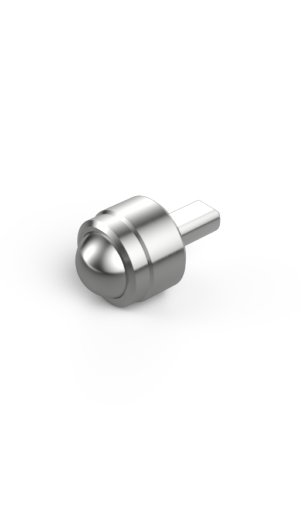
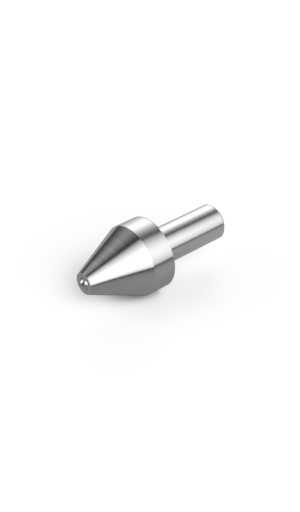
When it comes to hardness testing, both the Brinell and Vickers methods are widely used across industries. At UPI Laboratories Europe BV, we specialize in the calibration and certification of Reference blocks and indenters for both methods. Understanding the differences between these two tests and knowing when to use which can significantly improve your testing process and results.
Brinell and Vickers hardness numbers are derived from different principles and indenter geometries, but in many cases, a correlation between them is possible. Conversion is especially helpful when different specifications or industry standards call for results on different scales.
While direct mathematical formulas for converting Brinell to Vickers and vice versa are not universally applicable, empirical conversion tables based on test data are often used. These tables are published in ISO, ASTM and other technical standards and provide conversion guidance within specific hardness ranges and material types.
It’s worth noting that conversions may vary depending on the material being tested. For example, softer materials like aluminum may show more variation between the two methods than harder metals like steel. When precise mechanical properties are critical, it’s advisable to perform both tests independently rather than relying solely on conversions.
At UPI Laboratories Europe BV, we can help clients determine appropriate conversions for their specific materials and test conditions. However, it’s important to remember that conversions should be used carefully, especially when exact values are critical to product performance or safety.
Both Brinell and Vickers tests are static indentation methods, but they differ significantly in their application:
In terms of accuracy, Vickers offers better precision due to its finer indentation and is commonly used in labs and research settings. Brinell is typically more suitable for field testing and quality control in production environments.
Choosing between Brinell and Vickers depends largely on your material, the accuracy required, and your operational setting. Here are some common scenarios:
Brinell tests tend to be more forgiving of surface imperfections and are ideal for larger samples or those that are difficult to section. Vickers, with its more delicate indentation, is sensitive to surface conditions and therefore requires more careful sample preparation.
The Brinell method is often preferred for rough or uneven surfaces, or where the structure of the material is too coarse for smaller impressions. On the other hand, Vickers is ideal for fine-structured materials, thin sections, and where detailed surface analysis is needed.
At UPI Laboratories Europe BV, we provide certified indenters and calibrated blocks for both Brinell and Vickers testing.
Let UPI Laboratories Europe BV support your quality assurance with precision, reliability and full ISO/IEC 17025 accreditation. Reach out today and discover how we can help you achieve optimal testing results with confidence.