UPI Laboratories Europe BV specializes in the calibration and supply of hardness testing indenters and test blocks for Vickers, Rockwell, Knoop and Brinell. Operating under ISO/IEC 17025 accreditation (RvA), we provide documented traceability and internationally accepted certificates through the ILAC network. Our diamond indenters and hardness test blocks meet ISO and ASTM standards, are built for long life and consistency, and can be supplied with a NADCAP compliant grid.
A Vickers unit measures a material’s resistance to plastic deformation using a diamond pyramid indenter. The tip forms a square-based pyramid that creates geometrically similar impressions at different forces. That means the method covers a very wide range, from micro loads to higher forces, and can be used on almost all metals.
In daily reporting you will see results written as, for example: 440HV30 or 440HV30/20. Read it like this:
Because the geometry stays consistent, Vickers values are in many cases largely independent of the chosen force between about 500 gf and 50 kgf. That flexibility makes the method useful in production control, failure analysis and research.
A typical Vickers unit applies a defined pre-load and main load, holds the load for a set dwell time and then measures the two diagonals of the impression. Modern units may do this optically or with camera software. Good practice includes clean, flat surfaces and enough space between indents to avoid work-hardening effects (keep indents more than three indentation diameters apart).
Below are the critical tools and references UPI supplies to keep your unit accurate and compliant.
UPI diamond indenters are precision mounted in exact conformity to the diamond’s grain structure for long life and stable geometry. Every indenter is supplied to meet the relevant ISO and ASTM requirements. This helps you achieve repeatable impressions and clear points of measurement.
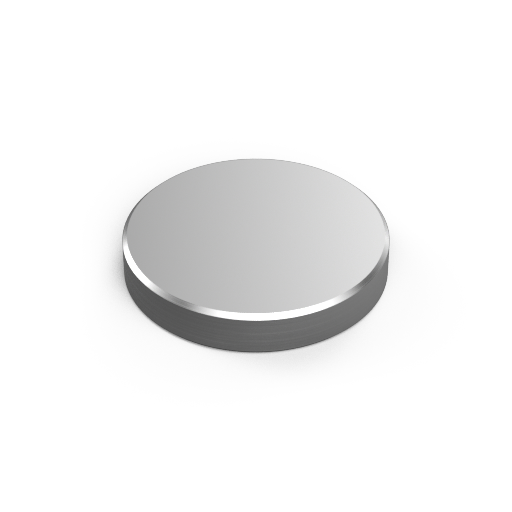
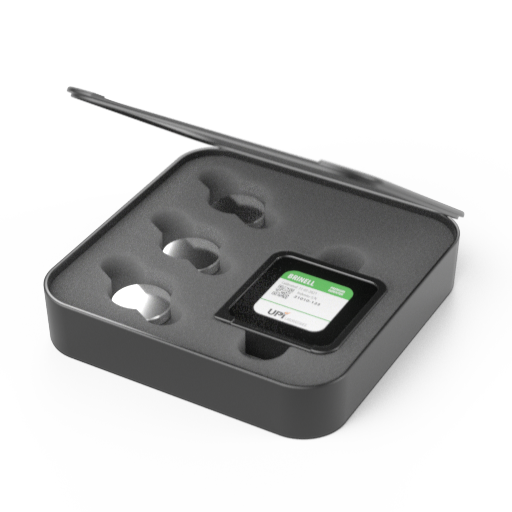
UPI Vickers test blocks are manufactured from homogenous material, mirror or matt finished and laser engraved. They meet or exceed the relevant ISO and ASTM standards and are available with a NADCAP compliant grid when required. Use them for daily checks and routine verification across the ranges you test.
UPI operates under ISO/IEC 17025:2017 (RvA) for the calibration of hardness testing indenters. Our accreditation gives you documented traceability and confidence during customer or regulator audits. You can view our scope on the RvA website to see what we calibrate and the best uncertainties (CMC’S) for each item.
Calibration certificates from UPI follow the requirements of ISO/IEC 17025 and are backed by the ILAC/MRA mutual recognition arrangements via RvA. That supports acceptance of your results across borders and programs that reference ISO and ASTM standards.
The Vickers method can be applied to almost all metals, from soft alloys to very hard tool steels. It is used widely in automotive and aerospace applications, and in laboratories for sample evaluation and advanced testing tasks. Because the same diamond geometry works at different forces, you can test thin sections, small features and surface-treated parts at lower loads, and bulk materials at higher loads.
Some practical tips: prepare the surface so the edges of the impression are sharp; keep your dwell times consistent with your procedure; and space indents to reduce interaction between work-hardened areas. Under certain circumstances Vickers hardness can be correlated to tensile strength for many metals, and it is often used as an indicator of wear resistance.
Keeping your Vickers unit reliable is a mix of good habits and accredited support:
UPI supplies the calibrated indenters and test blocks you need and provides accredited calibration for your indenters. With RvA accreditation and ILAC recognition, your documentation is easier to defend during supplier qualification and regulatory inspections.
Selecting a Vickers hardness test unit is easier when you start with the right tooling and calibration plan. UPI Laboratories Europe BV supplies the critical parts around your unit, dual calibrated diamond indenters and compliant HV test blocks — and we calibrate your indenters under ISO/IEC 17025 (RvA).
For additional information you can contact us by using the contact form, or by e-mail. Ask for our brochure and our RvA scope to see the full calibration capabilities and best uncerainties. UPI Laboratories are ready to help you achieve reliable Vickers measurements that meet the relevant ISO and ASTM standards.