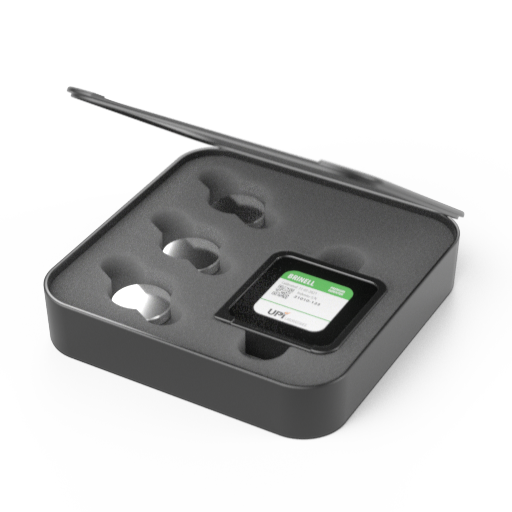
The Vickers hardness test is one of the most widely used methods for determining the hardness of materials in industries where precision and consistency are crucial. With its fine accuracy and wide applicability, the Vickers method allows engineers, researchers, and manufacturers to evaluate the durability and mechanical properties of metals, alloys, and advanced materials. At UPI Laboratories, we specialize in reliable hardness testing and calibration services that meet international standards.
The Vickers hardness test works by pressing a diamond-shaped indenter into the surface of a material under a defined load. Unlike other hardness tests, the Vickers method uses a pyramidal diamond with a square base and an angle of 136°. Once the load is removed, the size of the indentation is measured under a microscope. The Vickers hardness number (HV) is then calculated by dividing the applied force by the surface area of the indentation.
This approach makes the Vickers method highly versatile, since the results are independent of the size of the applied load. It can be used to test very thin materials, coatings, and small parts without compromising accuracy. For industries where even minor variations in hardness can affect performance, the Vickers test is a trusted solution.
One of the main advantages of the Vickers hardness test is its precision. The method allows for testing materials of virtually any hardness level, from very soft metals to extremely hard alloys. The small and clearly defined indentations make it suitable for thin specimens or micro-scale applications.
Other benefits include:
These strengths make the Vickers method particularly important for industries such as aerospace, automotive, medical device manufacturing, and research laboratories, where high levels of precision and repeatability are essential.
Accurate hardness measurement requires not only a robust testing method but also reliable equipment. Vickers hardness testing machines range from simple manual testers to fully automated systems that integrate digital imaging. The choice of equipment depends on the material being tested, the required accuracy, and the frequency of testing.
International standards such as ISO 6507 and ASTM E384 define the procedures, loads, and equipment requirements for Vickers hardness testing. Following these standards ensures that results are reproducible and can be compared globally. UPI Laboratories adheres to these guidelines in every test and calibration process, providing customers with traceable and reliable data.
To maintain accuracy, regular calibration of both the testing equipment and the reference test blocks is essential. Calibration ensures that the applied load is correct and that the optical measurements of the indentation remain precise. Without proper calibration, even the best equipment can produce inconsistent or misleading results.
At UPI Laboratories, we provide calibration services for Vickers hardness test blocks that comply with international standards. Our processes guarantee consistent measurement performance, reducing uncertainty and ensuring compliance with quality assurance requirements. For manufacturers and research facilities, this means confidence in their test results and assurance that their products meet the required hardness specifications.
Choosing the right partner for Vickers hardness testing and calibration is key to maintaining quality and compliance. At UPI Laboratories, we combine technical expertise with advanced equipment and internationally recognized procedures. Whether you require routine hardness testing, calibration of your test blocks, or support with compliance to ISO and ASTM standards, we are here to help.
Our focus is on delivering accurate, traceable, and repeatable results that support your operations and research. By working with UPI Laboratories, you can rely on precision, consistency, and a partner dedicated to helping you achieve the highest standards in material testing.
Get in touch with our team today to learn more about our Vickers hardness test services and discover how we can support your testing and calibration needs.