UPI Laboratories Europe BV specializes in the calibration and supply of hardness testing indenters and test blocks for Vickers, Rockwell, Knoop and Brinell. Operating under ISO/IEC 17025 accreditation (RvA), we ensure full traceability and internationally recognized calibration through the ILAC network. Our precision-mounted diamond indenters and consistently manufactured hardness test blocks meet ISO and ASTM standards and are available with a NADCAP compliant grid.
The Vickers hardness unit is written as HV followed by the test force and, if needed, the dwell time. A common format looks like this: 440HV30 or 440HV30/20.
read it as:
Vickers uses a diamond indenter in the shape of a square-based pyramid. Because the geometry is consistent, Vickers can be applied over a very wide range of forces. In practice, values are largely independent of force between about 500 gf and 50 kgf, which makes HV suitable for thin sections, coatings and bulk materials alike.
A Vickers test measures a material’s ability to resist plastic deformation. The indenter is pressed into a prepared surface under a defined force for a defined time. After unloading, the two diagonals of the square impression are measured. From those diagonals the HV value is calculated and reported in the format above. The method is widely used in production control, failure analysis and R&D across metals. Under certain conditions, HV values can be correlated with tensile strength and used as an indicator of wear resistance.
To keep your results repeatable you need the right tooling and traceability. UPI supplies the critical parts around your Vickers unit:
Our diamond indenters are precision mounted in exact conformity to the grain structure for stable geometry and long service life. Each indenter is supplied dual calibrated, meeting the relevant ISO and ASTM requirements, so you can trust the impression shape and the points of measurement.
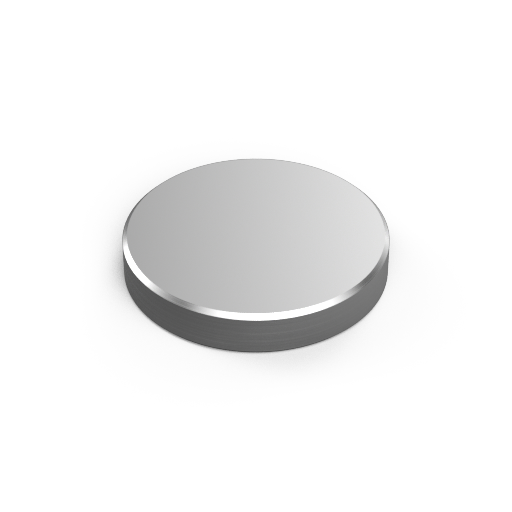
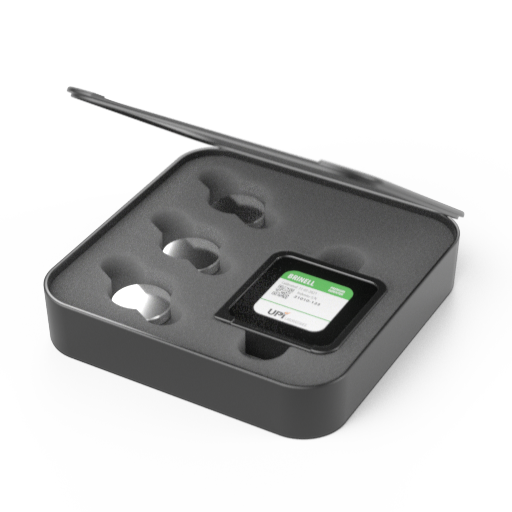
UPI hardness test blocks are produced from homogenous base material, mirror or matt finished and laser engraved. They meet or exceed the relevant ISO and ASTM standards and are available with a NADCAP compliant grid. Use them for daily verification and periodic checks across your working ranges.
UPI Laboratories works under ISO/IEC 17025 (RvA) for the calibration of hardness testing indenters. Our scope (viewable on the RvA website) shows what we calibrate and the best achievable accuracies.
All certificates are backed by the ILAC arrangements via RvA, helping with acceptance of your results across borders and programs that reference ISO and ASTM standards.
Vickers (HV) is one of four principal indentation methods alongside Rockwell, Brinell and Knoop.
Each unit has its own test piece preparation rules, loads and reading methods. Vickers stands out for its broad force range and the ability to use one indenter geometry across soft and hard metals.
About conversions: while published charts can provide approximate conversions between HV, HR and HBW, they are only guides. Differences in material type, microstructure and heat treatment can lead to deviations. When accuracy matters, test on the required scale rather than relying solely on a conversion. UPI can supply the correct indenter and blocks for scale so you can test directly.
UPI Laboratories Europe BV focuses on the parts that define your result: diamond indenters, compliant hardness test blocks and accredited calibration for indenters. We operate under ISO/IEC 17025 (RvA), and our documentation benefits from ILAC/MRA recognition through signatories such as RvA, UKAS, DaKKS, COFRAC, NVLAP and A2LA. Our products meet the relevant ISO and ASTM standards; blocks are available with a NADCAP compliant grid when required.
Want to get reliable HV numbers with clear traceability? Contact us via the contact form or by e-mail and ask for our brochure and RvA scope. We are pleased to help you choose the right indenter and test blocks, set up simple verification routines and keep your Vickers hardness unit accurate and consistent over time.